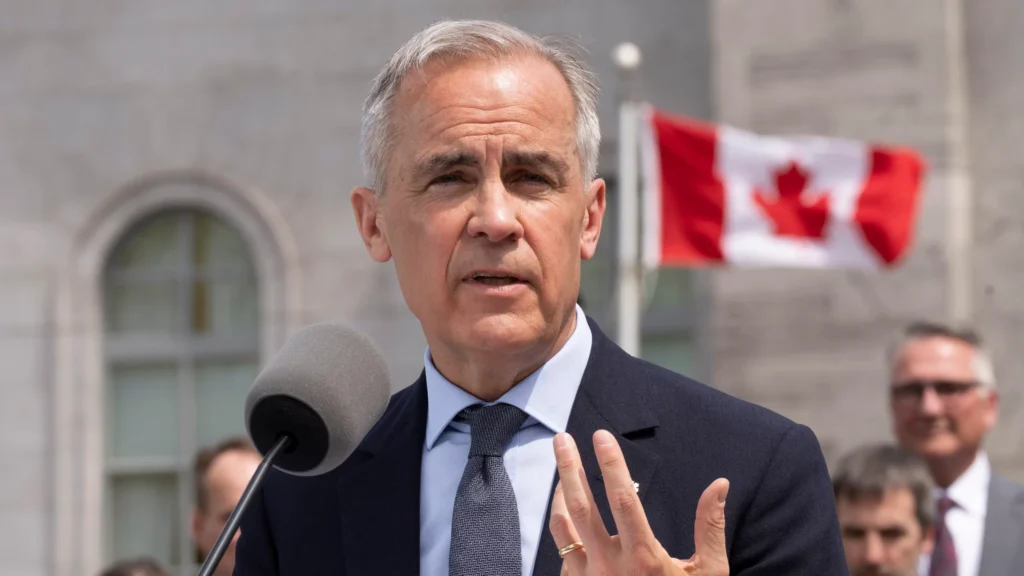
Mark Carney’s Liberal Party has clinched a fourth term in a nail-biter election, vowing to turn Canada into an "energy superpower." But can a nation built on oil and gas truly pivot to a renewable energy future under his leadership? On April 28, 2025, Canadians went to the polls, and the results have set the stage for a new chapter in the country's energy policy. With a minority government, Carney faces both opportunities and challenges in fulfilling his ambitious promises. As the world watches, Canada’s role in global climate action and energy trade hangs in the balance. This article delves into how the new government plans to shape the future of renewable energy in Canada, examining the policies, the politics, and the potential pitfalls.
Key Points
- Fast-tracking clean energy projects with tax credits and public funding.
- Cutting project approval times from five years to two for renewable infrastructure.
- Boosting critical mineral production (e.g., lithium, cobalt) for renewable tech.
- Expanding trade diversification to reduce U.S. dependency and grow renewable exports.
- Dropping the consumer carbon tax while keeping industrial pricing, paired with energy efficiency pushes like heat pumps.
- Supporting low-carbon conventional energy, raising questions about renewable priorities.
- Navigating a minority government, which could complicate policy execution.
Fast-Tracking Clean Energy Projects
Carney has pledged to accelerate the development of clean energy projects across Canada, leveraging existing federal tax credits and the Canada Growth Fund to incentivize investment. This initiative is expected to spur growth in wind, solar, and hydroelectric power, which already account for a significant portion of Canada’s energy mix. However, the government’s vision extends beyond these staples. Emerging technologies like tidal energy, with potential in coastal provinces such as Nova Scotia and British Columbia, and geothermal energy, viable in geologically active regions, could also see a boost. This diversification not only strengthens Canada’s renewable portfolio but also opens new economic avenues.
Collaboration with provincial governments will be critical, given their jurisdiction over energy resources. Carney’s administration has hinted at funding partnerships and joint initiatives to align federal and local priorities, addressing a historical hurdle to renewable expansion.
Streamlined Project Approvals
Lengthy approval processes have long plagued Canada’s energy sector. The new government aims to slash this timeline from five years to two with a unified review process, speeding up renewable infrastructure like wind farms and solar parks. While this promises faster progress, critics caution that cutting corners could weaken environmental and community assessments. Striking a balance between efficiency and accountability will be key to sustaining public trust.
Critical Minerals and Supply Chains
Canada is poised to lead in critical mineral production—think lithium, cobalt, and nickel—essential for batteries and renewable tech. The “first and last mile fund” will connect these projects to global supply chains, leveraging Canada’s vast reserves and sustainable mining ethos. This move not only bolsters the renewable sector but also fortifies economic resilience, creating jobs in mining communities transitioning from fossil fuels.
Trade Diversification and Renewable Exports
With $5 billion allocated to the Trade Diversification Corridor Fund, Carney’s government seeks to reduce reliance on the U.S. amid rising protectionism. New trade corridors to Europe and Asia could see Canada exporting renewable tech like hydrogen solutions or battery systems. This aligns with international climate commitments, such as the Paris Accord, enhancing Canada’s geopolitical standing as a sustainable energy player.
Carbon Pricing and Energy Efficiency
Scrapping the consumer carbon tax in favor of industrial pricing marks a bold shift, paired with subsidies for heat pumps and retrofits. While the government claims this eases household costs while cutting emissions, environmentalists argue it lacks the teeth to drive renewable adoption. The success of this pivot hinges on whether efficiency measures can offset the loss of broader carbon incentives.
Challenges and Controversies

1. Balancing Conventional and Renewable Energy
Carney’s dual-track strategy—supporting both renewables and low-carbon fossil fuels—has ignited debate. Provinces like Alberta and Saskatchewan rely heavily on oil and gas, and the government sees value in a gradual transition. Yet, environmentalists warn this dilutes climate urgency, risking resource conflicts that could stall renewable growth. A collaborative approach to low-carbon tech might bridge the gap, but the jury’s out.
2. Minority Government Dynamics
Leading a minority government, the Liberals must court parties like the NDP to pass legislation. This could delay or dilute renewable plans—or, conversely, strengthen them if progressive allies push harder. Political horse-trading will shape the pace and scope of Carney’s vision.
3. Public Opinion and Funding Challenges
Energy policy splits Canadians: urban voters demand climate action, while rural and resource regions prioritize jobs. Bridging this divide is a tall order. Funding massive renewable projects in a tight budget climate adds another layer of complexity—success depends on creative financing and public buy-in.
Conclusion
Mark Carney’s vision for Canada as an "energy superpower" holds immense promise for renewables. From fast-tracking projects to diversifying trade, the groundwork is ambitious. Yet, challenges like political gridlock, funding woes, and energy dualities loom large. Will this be Canada’s green turning point, or will old habits die hard? Only time—and bold execution—will tell.